Healing Isn’t About Controlling the Mind, It’s About Redirecting the River
Trauma Healing Works Best When We Work With The Body, Not Against It
Many people seeking trauma therapy come in believing that healing requires effort, insight, and mental control. If they could just understand their anxiety better, challenge negative beliefs more effectively, or think positively enough, their symptoms would finally ease.
And yet, even with insight and self-awareness, the same emotional and nervous system patterns often keep returning.
This experience is common, and it is not a failure. It is a sign that healing requires more than cognition alone.
Trauma Lives in the Nervous System, Not Just the Mind
Trauma, chronic stress, and long-standing emotional patterns do not live only in the thinking brain. They live in the nervous system and the body, shaped by repetition, survival responses, and lived experience over time.
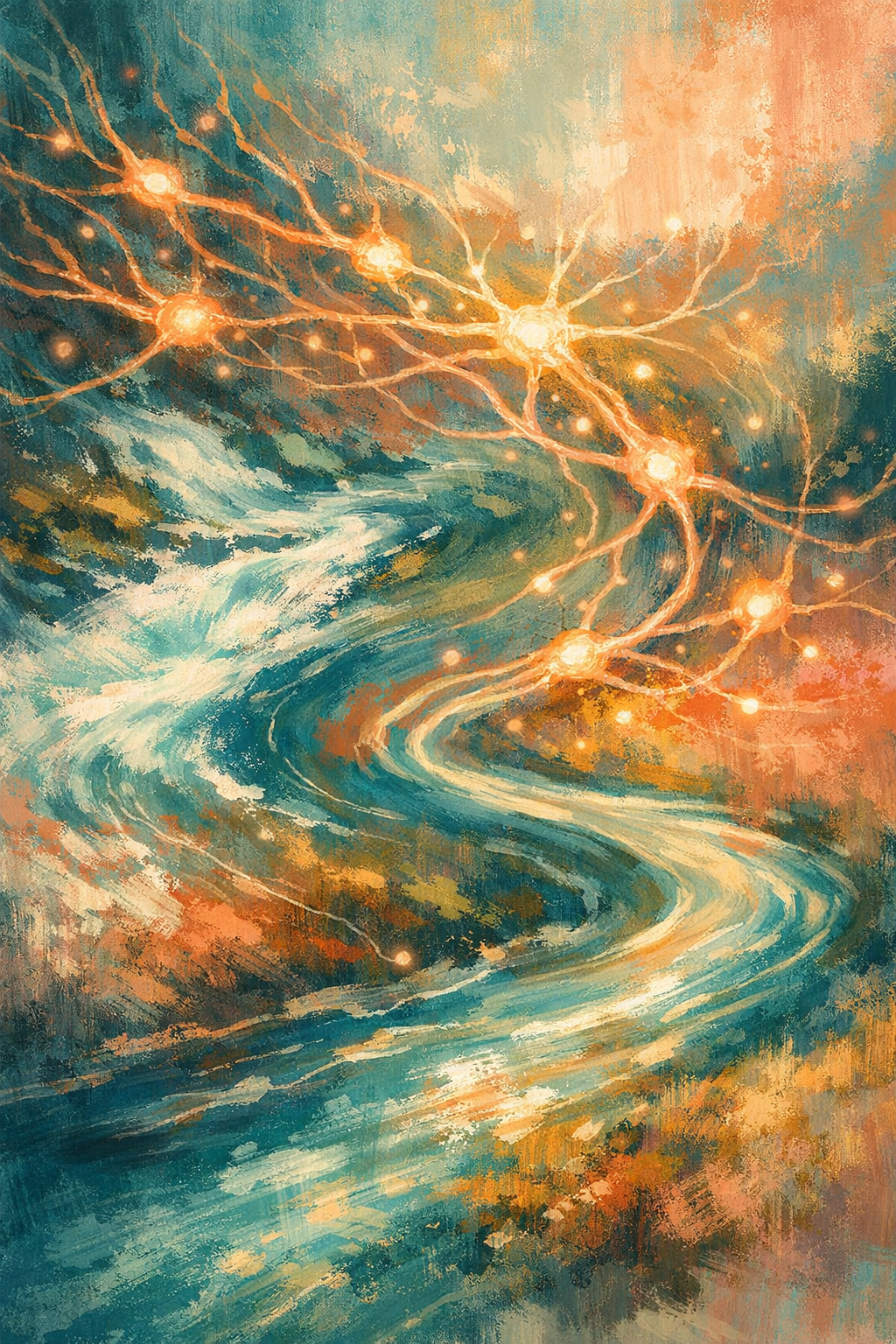
I often describe these patterns as white water rapids.
They are fast, powerful, and automatic. These rapids might show up as anxiety, panic, emotional shutdown, hypervigilance, people-pleasing, or deeply ingrained negative beliefs that feel stronger than logic. At one point, these responses were adaptive. They helped you survive.
Trying to control these reactions through thought alone can feel like standing in the middle of a rapid and yelling at the water to calm down.
We yell because we’re desperate for relief. Because the force feels overwhelming. Because somewhere along the way, we learned that effort and control were the only options when things felt out of hand.
But rivers don’t change course because they’re shouted at. They change when the terrain around them begins to shift.
Trauma Healing Is About Redirection, Not Force
Healing doesn’t happen by forcing the river to stop. It happens when the conditions around it begin to change, when new channels are gently created and the water is given another way to move.
Imagine slowly carving gentle side channels off the main rapid, new streams where the water can move with more ease. These channels do not appear all at once. They form gradually through repeated experiences of safety, regulation, and support.
At first, most of the water still rushes through the old rapids. That does not mean therapy is not working. It means the nervous system is doing exactly what it was designed to do, following the strongest and most familiar pathway.
With consistent body-based therapy, such as somatic therapy, EMDR, mindfulness, yoga, or art therapy, the new channels begin to deepen. The water flows there more often. The rapids slowly lose intensity.
Over time, the river itself changes.
Neuroplasticity and Trauma Healing
From a neuroscience perspective, this process is supported by neuroplasticity, the brain and nervous system’s ability to reorganize in response to new experiences.
Trauma strengthens certain neural pathways, especially those related to threat, vigilance, and survival. These pathways become the default rapids. Neuroplasticity means those pathways are not permanent.
When therapy offers repeated, regulated, body-based experiences of safety and agency, new neural connections form. The brain begins to associate the present moment with less threat and more choice. The nervous system learns through experience, not logic, that it no longer has to remain in survival mode.
This is why trauma healing does not happen through insight alone.
When the nervous system settles, understanding tends to follow.
Why Body-Based Trauma Therapy Matters
Trauma healing works best when we work with the body, not against it. Somatic therapy, EMDR therapy, mindfulness, yoga, and art therapy directly engage the nervous system, helping it process experiences that were overwhelming or incomplete when they first occurred.
These approaches do not rely on willpower or positive thinking. They help the body complete stress responses, integrate traumatic memories, and develop a felt sense of safety and self-trust.
Insight often emerges naturally, but it follows regulation, not the other way around.
You Are Not Broken, Your Nervous System Is Adaptive
One of the most important truths in trauma therapy is this. Your symptoms are not signs of weakness or failure. They are signs of adaptation.
Your nervous system learned how to respond based on what it needed to survive. Healing is not about erasing that history. It is about honoring it while creating space for new patterns to emerge.
When the nervous system is met with patience, curiosity, and care, it does not need to be forced into change. It naturally begins to redirect toward regulation, connection, and resilience.
Trauma Therapy in Greenville, SC
At HeARTS for Hope Therapy in Greenville, SC, we offer trauma-informed, body-based therapy including somatic therapy, EMDR therapy, art therapy, mindfulness, and yoga. Our EMDR-certified clinicians work from a nervous system informed approach that emphasizes safety, creativity, and integration.
If you have been stuck in emotional patterns that feel bigger than logic, know this.
You do not need to control your mind to heal.
You do not need to fight your nervous system.
Healing happens when the river is gently redirected, and when your system is finally met with the care it needed all along.
For those seeking body-based support, our trauma healing intensives integrate EMDR, art therapy, and somatic therapy to offer focused, nervous system–informed healing in a supportive and carefully held container that allows the redirection of flow to unfold more efficiently, without force.